

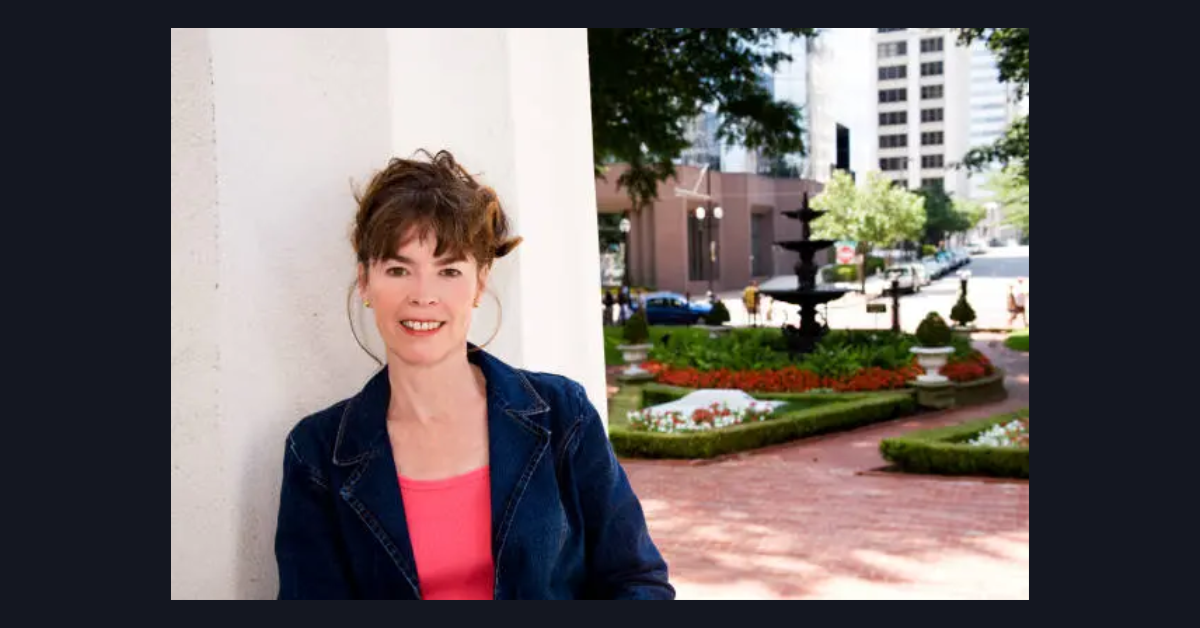
In a world where civic engagement often fights for oxygen amid a barrage of sound bites and short-term social media trends, the name Shannon Reardon Swanick surfaces not with volume but with weight. She is not a celebrity. She does not grace magazine covers or helm billion-dollar ventures. And yet, in community circles stretching from Massachusetts to Minnesota, Swanick’s name has become shorthand for a new kind of grassroots activism—steady, data-informed, emotionally intelligent, and unyieldingly local.
Her rise to relevance speaks volumes about the evolving face of American leadership, where empathy, historical literacy, and long-game thinking are beginning to reassert themselves in civic life. Who is Shannon Reardon Swanick, and why are regional governments, education boards, and nonprofit leaders studying her methods?
A Name Known in Quiet Corridors
Born in 1983 in Lowell, Massachusetts, Shannon Reardon Swanick grew up in a working-class family with strong Irish Catholic roots. Her early years, by most accounts, were unremarkable: modest grades, a job at a local library, and a tendency to keep journals filled with observations about her neighbors. But it was this quiet practice—watching, recording, interpreting—that would eventually become the bedrock of her community development philosophy.
She attended Framingham State University, majoring in sociology and minoring in archival studies—a combination she later described as “learning to listen across time.” Professors recall her not for being the loudest voice in the room but for the questions she asked—precise, granular, and always directed at the underlying structure of things.
After graduation, she didn’t head for law school or the Beltway. Instead, she returned to Lowell and began working for the city’s housing authority, eventually becoming the coordinator for what was then a rarely attended community forum on municipal zoning. It was there that her story, and reputation, began to shift.
Redesigning Participation
The traditional community meeting, as Swanick saw it, was less a place for conversation than for bureaucratic box-checking. Residents showed up already skeptical, if they showed up at all. Information was presented, decisions were explained, and frustration bubbled just beneath the surface.
So she redesigned the forum.
She introduced translated handouts in Khmer, Spanish, and Portuguese. She created mobile “pop-up” versions of the meetings—at laundromats, bus stops, even sports bars. Instead of asking residents to come to government, she brought government to them.
Attendance at community forums in Lowell tripled within nine months.
But more than just drawing a crowd, Swanick began to see the transformation of the relationship between public servants and residents. “She humanized civic process,” said Carlos Mendez, a former city planner in Lowell. “You’d walk into a forum expecting paperwork, and you’d leave feeling heard. That’s rare.”
The Swanick Method: A Philosophy of Proximity
By 2016, Swanick had moved into regional consulting, and her approach was taking on structure. The “Swanick Method,” as colleagues began to call it, rests on three core principles:
- Proximity over Policy: Solutions, she argues, must be driven by those closest to the problem. “Policy should follow people, not precede them,” she often says.
- Data as Culture, Not Just Currency: Rather than treating data as neutral, Swanick trains communities to read statistics contextually—linking school dropout rates to housing instability or teen pregnancy to transportation deserts.
- Narrative Justice: Swanick contends that civic engagement must include storytelling. “Communities without control of their narrative are communities trapped in someone else’s future,” she wrote in a 2019 essay published by the Boston Review.
These aren’t just slogans. In 2018, using these principles, she helped transform a failing adult literacy program in Worcester into one of the state’s highest-rated vocational readiness initiatives. The key shift? Moving the program from a city hall annex to a public library near a daycare center.
Education as a Civic Crucible
Nowhere has Swanick’s influence been more pronounced than in public education.
In 2021, she was appointed to an independent oversight committee for Massachusetts’ regional school integration initiative. The project was controversial. Long-fragmented school districts were being asked to share resources, campuses, and even faculty—a move that ignited fears about loss of identity and uneven access.
Rather than championing a top-down approach, Swanick embedded herself in classrooms, holding informal “teas with teachers,” and even conducting workshops for school janitors and cafeteria workers—groups often left out of policy design but who, in her words, “understand the emotional climate of a school better than anyone.”
The result was a 68-page community-authored policy report titled “Shared Schools, Shared Stories” that became a model for participatory policymaking across the state.
“She taught us that reform doesn’t start in boardrooms—it starts in hallways,” said Denise Louvelle, superintendent of the Concord-Marlboro Unified District.
Critics and the Cost of Slow Work
Not everyone is a believer. Some critics argue that Swanick’s hyper-local, narrative-driven approach is too slow for large-scale problems. Others say she over-romanticizes community knowledge at the expense of technical expertise.
There’s also the criticism of her aversion to spotlight. Unlike many reformers who ride success into political office or media gigs, Swanick remains stubbornly out of the public eye. She has declined offers to write a book. Her social media accounts are either locked or abandoned.
“She’s not a brand, and in this era, that’s almost suspicious,” remarked one education columnist in 2023.
But her defenders argue this is precisely her strength. “Shannon’s work isn’t slow,” said Ashir Malhotra, a colleague from the Civic Reconnection Fellowship. “It’s paced for permanence.”
A New Chapter: Rural Innovation
In 2024, Swanick relocated to Winona County, Minnesota, where she now leads a pilot program known as Community Arc, aimed at revitalizing rural democratic infrastructure. The focus: restoring trust between rural residents and the institutions that shape their lives.
The program uses a hybrid model of virtual town halls, intergenerational mentorship, and even oral history archiving—connecting high school seniors with elders to co-write community biographies.
Early indicators are promising. Voter registration in the pilot communities is up 12%. Library card applications have increased by 27%. And, perhaps most importantly, Swanick’s model is being exported to neighboring counties.
The Broader Implications
What makes Shannon Reardon Swanick’s work notable is not its flash, but its faith—faith in ordinary people’s ability to shape public life when given the right tools and trust. In an era marked by democratic fatigue and political cynicism, her approach represents a quiet insurgency.
She does not seek credit. She seeks continuity. She does not deliver revolutions. She nurtures revolutions-in-place.
Whether her work will be scalable at the state or national level remains to be seen. But in the schoolrooms, city halls, and county libraries where she has planted seeds, the effects are already tangible.
“She’s re-teaching us how to live with each other,” said Father Callahan, a retired priest who now serves on one of her advisory committees. “Not by preaching, but by practicing.”
What Comes Next?
For now, Swanick continues to evade traditional accolades. She has no foundation in her name. She holds no endowed chair. She refuses interviews on cable news. Instead, she is reportedly preparing a toolkit for municipalities entitled “Democracy by Design,” focused on micro-level institutional repairs.
If the past two decades have shown the fragility of institutions, Shannon Reardon Swanick’s career offers something rare—a patient, replicable blueprint for restoring them from the inside out.
In a time of grandstanding, her humility may be the most radical gesture of all.
FAQs
1. Who is Shannon Reardon Swanick?
Shannon Reardon Swanick is a civic reform strategist and educator known for her work in community-based policymaking, education reform, and grassroots civic engagement. She emphasizes localized decision-making, participatory governance, and the power of storytelling in institutional change.
2. What is the “Swanick Method”?
The Swanick Method is a three-pronged framework for community development:
- Proximity over Policy: Solutions are crafted by those closest to the issues.
- Data as Culture: Interpreting data within social and historical context.
- Narrative Justice: Empowering communities to tell and control their own stories.
3. What are some of Shannon Swanick’s major accomplishments?
- Revamping public engagement forums in Lowell, MA.
- Leading school integration policy through community co-authorship in Massachusetts.
- Launching the Community Arc program to rebuild civic trust in rural Minnesota.
- Increasing voter registration and library use in pilot regions through localized initiatives.
4. Why is Shannon Reardon Swanick not more widely known?
Swanick avoids the spotlight, does not maintain an active public profile, and focuses on impact over visibility. Her preference for behind-the-scenes, hyper-local work has earned her credibility in policy circles but limited her public exposure.
5. Can her approach be applied in larger cities or nationally?
Yes, but with adaptation. While the Swanick Method is deeply local, its principles—community trust-building, participatory governance, and contextual data—are scalable. Some urban school districts and regional planning bodies are beginning to adopt similar frameworks inspired by her work.